 ReinTrace
Write the main point first
Once your horse is looked after, write down the one correction or explanation that mattered most, in your instructor’s words if you can remember them. “Sit up before the transition, not during it” is worth more than a page about the whole hour.
Add the date, the horse, the instructor and what the lesson was about. That is enough to find the note again among a dozen similar rides. You can add more later.
Keep what you were told apart from what you felt
Your instructor sees one thing from the ground and you feel another in the saddle. Write them on separate lines: what they said, what you tried, what you noticed. When the two don’t match, you have a good question for the next lesson.
Be specific about the moment. “Canter felt awful” helps less than “canter on the right rein lost rhythm after the corner.”
| Prompt | Your note |
|---|---|
| Date and horse | Which ride, and which horse |
| Lesson focus | The exercise or skill you worked on |
| Instructor’s feedback | The words you want to remember |
| What you tried | The change you made during the lesson |
| What you noticed | What felt different, what still felt off, and when |
| Video | The clip and the moment worth watching, such as 0:18 |
| Next time | One question to ask, or the focus you agreed on |
Note the moment in the video
If someone filmed the lesson, keep the clip with the note and write down where the useful moment is: “trot transition on the long side, about 0:18.” A camera roll full of unlabeled riding videos is hard to use a month later.
A paused frame is good for pointing at your position. The seconds before and after show how you got there. Take what you see to your instructor rather than diagnosing it alone.
Keep a short summary for each horse
If you ride more than one horse, keep the notes with the right horse. What works on one may not work on another. A few lines under “What works,” “Watch for” and “Warm-up” are enough, and you can update them as you learn the horse.
Read last week’s note before you get on
Before the next lesson on that horse, read the last note and the question you left yourself. Afterwards, write a new note instead of editing the old one, so you can see how things changed over several rides.
The US Pony Clubs suggest the same cycle for riding goals: set a goal, make a plan, adjust it and look back. Dated lesson notes give you and your instructor something concrete to look back on.
Sources and further reading
Keep the lesson with the horse in ReinTrace
Save a Lesson note with the horse, instructor and skills you worked on, then link photos or a riding video from your library. Each horse’s Playbook keeps your quick reminders next to its lesson history. The journal, video player and Playbook are free. Rider Pro adds slow motion, marked moments, side-by-side comparison and drawing on a still for reviewing your clips.
Free riding journal · iPhone and Android · No account
See how ReinTrace works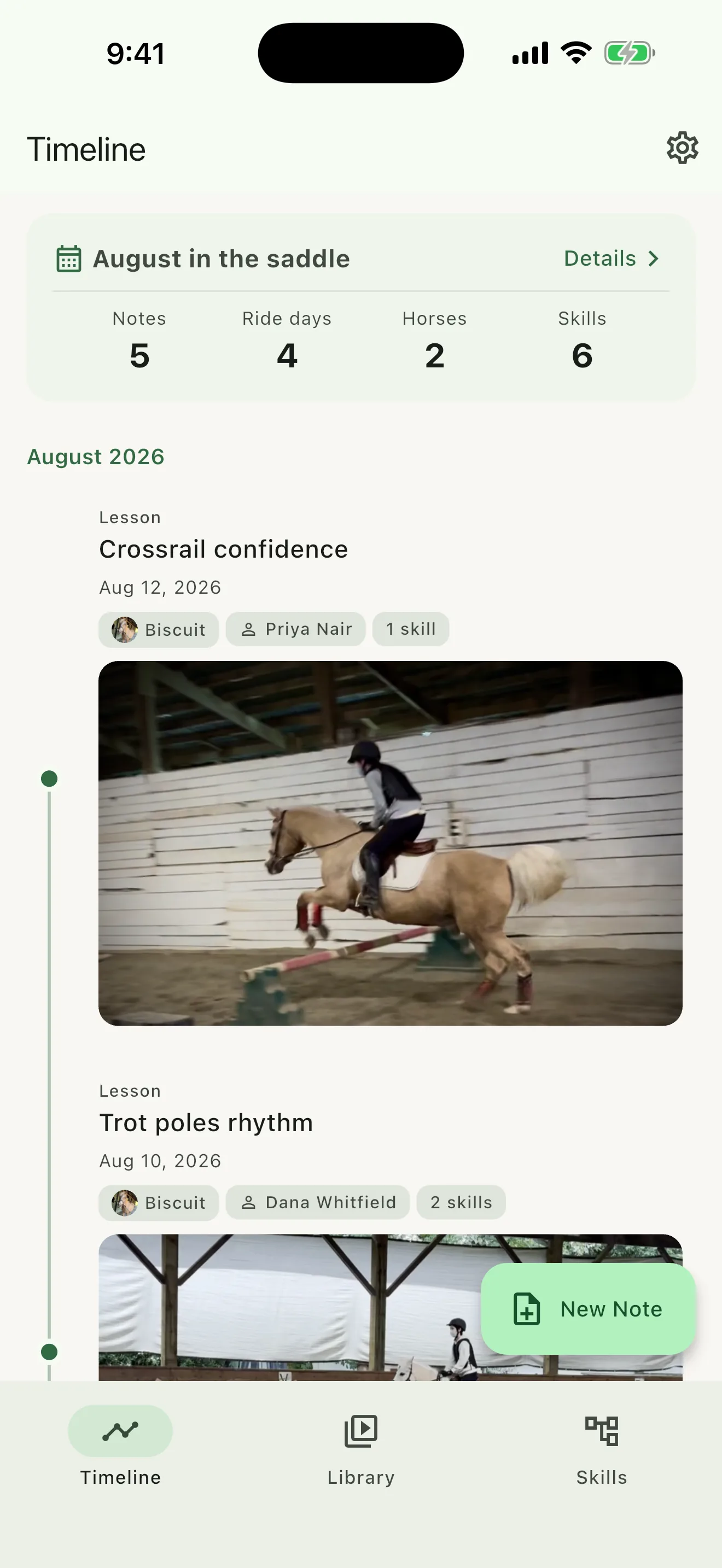
Questions
How long should riding lesson notes be?
Short enough that you actually write them. The horse, the main correction and one question for next time is a useful note. Add more when something needs explaining.
Can I keep notes on school horses I don’t own?
Yes. In ReinTrace you can add any horse you ride, link each note to it and keep a Playbook for it. You don’t need to own the horse.